Tutorial 1
Title: From “Not This Face” to “No Trace”: Unlearning, Negation, Counting & Spatial Reasoning in Generative Biometrics
Abstract: Generative models can now create faces, voices, irises, gait sequences, and fingerprints with remarkable realism. These capabilities support biometrics through data augmentation, privacy tools, and analysis pipelines. However, biometrics demands more than realism: it demands reliable control. This tutorial will focus on four key challenges where generative models often fail, and where failure directly impacts security and privacy: unlearning, negation, counting, and spatial reasoning. We will discuss how to make models “forget” specific identities to respect consent withdrawal, why handling negation (“without glasses,” “not subject X”) remains brittle, why counting (faces, fingers) is crucial yet error-prone, and how to enforce robust spatial control over pose, occlusion, and layout. Across different modalities, we will link these issues to real biometric applications and threats such as deepfakes and identity leakage, and provide practical evaluation methods and design patterns. Researchers and practitioners will leave with principled design patterns and a practical checklist for bringing generative systems in biometrics from “impressive” to trustworthy.
Presenters: Richa Singha and Mayank Vatsa
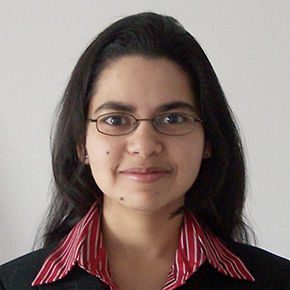
Richa Singh (Fellow, IEEE) is currently a Professor with IIT Jodhpur, India. She has participated in several initiatives, including UIDAI (Aadhaar) and designing biometrics Standards for e-Gov applications. She was a recipient of the Kusum and Mohandas Pai Faculty Research Fellowship at the IIIT-Delhi, the FAST Award by the Department of Science and Technology, India, and several best paper and best poster awards in international conferences. She has also served as the Program Co-Chair of CVPR2022, ICMI2022, IJCB 2020, FG2019, and BTAS 2016, and the General Co-Chair of FG2021 and ISBA 2017. She was also the Vice President (Publications) of the IEEE Biometrics Council. She is an Associate Editor-in-Chief of Pattern Recognition, and an area/associate editor of several journals. She is a Fellow of IAPR and INAE.

Mayank Vatsa (Fellow, IEEE) received the M.S. and Ph.D. degrees in computer science from West Virginia University, USA. He is currently a Professor with IIT Jodhpur, India. He has also participated in several Indian government initiatives, including UIDAI (Aadhaar), designing biometrics Standards for e-Gov applications, Responsible AI, DigiYatra, and formation of TIH of Computer Vision and ARVR at IIT Jodhpur. He is the recipient of the prestigious Swarnajayanti Fellowship Award from the Government of India, 2023 Meritorious Service Award by IEEE Biometrics Council, the A. R. Krishnaswamy Faculty Research Fellowship at the IIIT-Delhi, and several best paper and best poster awards at international conferences. He has served as an Area/Associate Editor of Pattern Recognition and Information Fusion, the General Co-Chair of IJCB2020, and the PC Co-Chair of FG2021, AVSS2021, IJCB2014, and ICB2013. From 2015 to 2018, he served as the Vice President (Publications) of the IEEE Biometrics Council, where he led the efforts to start the IEEE TRANSACTIONS ON BIOMETRICS, BEHAVIOR, AND IDENTITY SCIENCE. He is a Fellow of IAPR.
Tutorial 2
Title: Power Papers: Some Practical Pointers
Abstract: Writing a good research paper takes effort; more so if there is a page limit. Yet this skill is required of every researcher, who, more often than not, fumbles his or her way through. Good grammar is only a start; care and craft must be applied to turn a mediocre paper into a memorable one. Writing skills can indeed be honed. From the tutor: “In this reprise talk, I will highlight the common mistakes many researchers make, and offer practical pointers to pack more punch into your paper. Needless to say, the talk will be biased: I will speak not from linguistic theories, but from personal experience, sharing what has, and has not, worked for me. I will cover the major sections of a technical paper: the Title, Introduction, Related Work, Figures and Tables, and Conclusion. I will discuss the purpose of each section, present common mistakes, and provide concrete examples of good writing. I will also show how the different sections ought to be linked to reinforce the message behind the paper.”
Presenter: Terence Sim
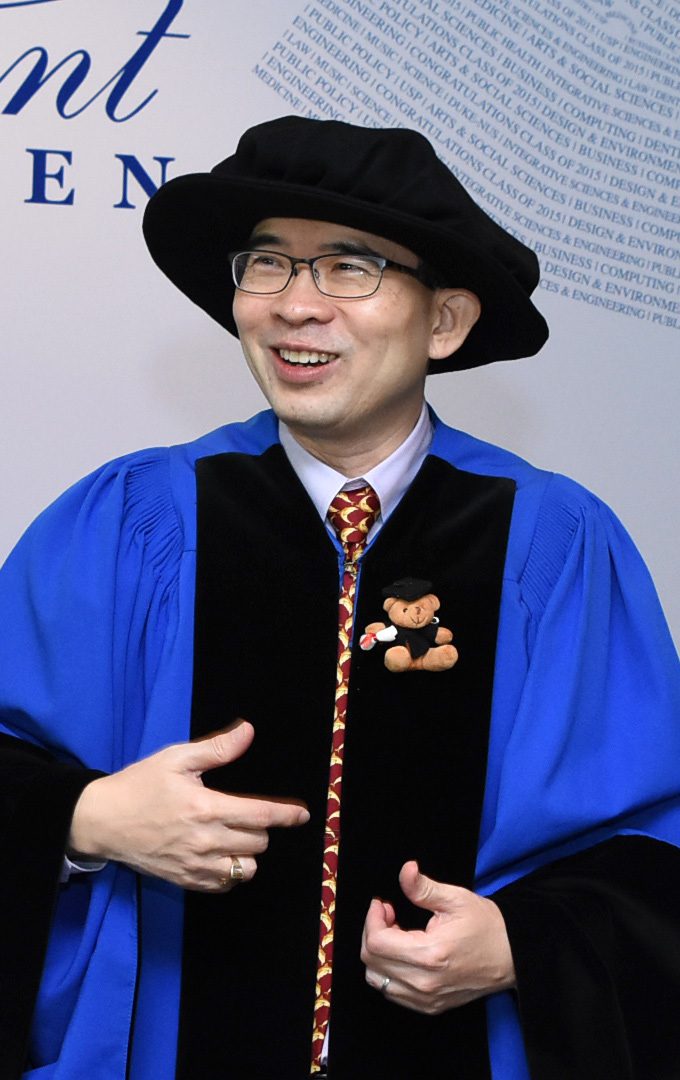
Dr. Terence Sim is an Associate Professor at the School of Computing, National University of Singapore (NUS). He is also Vice Dean for the NUS Office of Admissions. Over 2 decades, Dr. Sim has conducted research in Biometrics, Computer Vision, Computational Photography, and Privacy in Images. He served as Second Vice President in the International Association for Pattern Recognition from 2020 to 2022, and is still chairing a committee there. He is also active in the IEEE Biometrics Council, where for the past two years he chaired the Selection Working Group for the annual awards given by the Council. Dr. Sim obtained his PhD from Carnegie Mellon University in 2002, his MSc from Stanford University in 1991, and his SB from the Massachusetts Institute of Technology in 1990.